

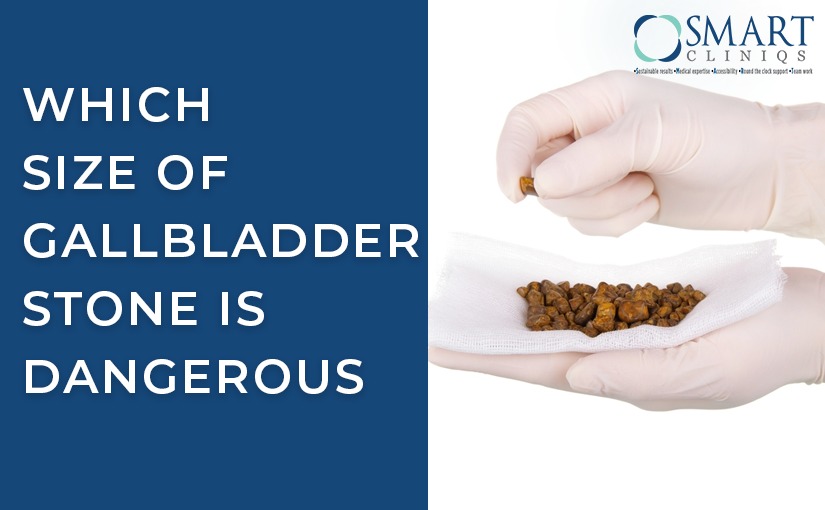
Gallbladder stones, also known as gallstones, are hard deposits that form inside the gallbladder—a small, pear-shaped organ located beneath the liver. They are made up of cholesterol, bile salts, and waste products and can vary in size, shape, and number. While some gallstones remain harmless, others can lead to severe complications if left untreated. This raises an important question: which size of gallbladder stone is dangerous?
In this detailed blog, we’ll explore what gallstones are, their sizes, potential risks, when surgery becomes necessary, and answer common questions about gallbladder stone complications.
Understanding Gallbladder Stones
The gallbladder stores and releases bile, a fluid that helps digest fats. When bile contains excessive cholesterol, bilirubin, or salts, it can form crystals that eventually harden into stones.
Gallstones vary in:
- Size: They can be as small as a grain of sand (1–2 mm) or as large as a golf ball (over 30–50 mm).
- Number: Some people develop a single stone, while others have multiple stones.
- Shape: Stones can be round, oval, or irregular.
While small stones often pass unnoticed, larger stones or multiple stones can block bile ducts, causing severe pain and complications.
If you’re considering Best Gallbladder Surgery in Delhi, consulting Dr. Atul Peter, who specializes in minimally invasive gallbladder removal, ensures safe and effective treatment.
Size of Gallbladder Stones – Why It Matters
Many people wonder, “Which size of gallbladder stone is dangerous?” The danger lies not just in the size but also in the location and potential to cause blockage or inflammation.
- Small Stones (<5 mm):
- Often pass through the bile ducts without symptoms.
- However, multiple small stones can sometimes move into the bile ducts, causing pancreatitis (inflammation of the pancreas).
- Medium Stones (5–10 mm):
- Have a higher chance of blocking bile ducts, leading to gallbladder inflammation (cholecystitis).
- It can cause pain, nausea, and digestive issues.
- Large Stones (10–30 mm):
- More likely to cause severe gallbladder problems.
- Can press against the gallbladder wall, causing chronic irritation, infection, and even gallbladder cancer in rare long-term cases.
- Very Large Stones (>30 mm or >3 cm):
- Considered high risk for complications.
- It can permanently damage the gallbladder, increase the risk of gallbladder cancer, and often require surgical removal.
Key Takeaway:
There is no completely safe size, but stones larger than 10 mm are more likely to cause symptoms, and stones above 20–30 mm (2–3 cm) are considered dangerous and usually require surgery.
Dangerous Sizes in Millimeters (mm)
If you’re wondering “which size of gallbladder stone is dangerous in mm?”, doctors often use the following general guidelines:
| Stone Size (mm) | Risk Level | Medical Recommendation |
|---|---|---|
| 1–4 mm | Low risk but may migrate to ducts | Monitoring or surgery if symptomatic |
| 5–9 mm | Moderate risk of duct blockage | Surgery may be considered |
| 10–19 mm | High risk of pain, infection, and inflammation | Surgery often recommended |
| 20–29 mm | Very high risk of complications | Surgery strongly recommended |
| ?30 mm (3 cm) | Dangerous, risk of gallbladder cancer | Immediate surgery advised |
This table highlights that stones larger than 10 mm often require close monitoring or removal, while stones above 20–30 mm are considered dangerous due to their potential for life-threatening complications.
What Size Gallbladder Stones Need Surgery?
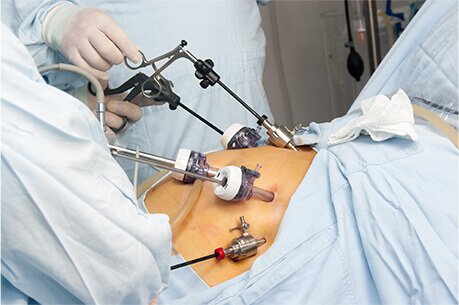
Gallbladder surgery (cholecystectomy) is the most effective treatment for gallstones. The decision depends on:
- Presence of Symptoms: Persistent pain, nausea, vomiting, or digestive problems are signs you may need surgery regardless of stone size.
- Size of Stone:
- Stones >10 mm with symptoms usually need surgery.
- Stones >20–30 mm are considered dangerous and need removal even if asymptomatic because they can cause silent damage.
- Risk of Complications: Stones blocking bile ducts can lead to pancreatitis or jaundice, requiring urgent treatment.
- Associated Conditions: Diabetic patients, those with compromised immunity, or people with gallbladder polyps along with stones may need early surgery.
If you’re considering surgery, consulting an experienced Gallbladder Surgeon in Delhi like Dr. Atul Peter’s, who specializes in minimally invasive gallbladder removal, ensures safe and effective treatment.
Maximum Size of Gallbladder Stone in mm
Gallstones can grow quite large over time if untreated. In rare cases, stones can reach 40–50 mm (4–5 cm) or even more. Such large stones:
- Increase the risk of gallbladder wall thickening and infection.
- May lead to chronic cholecystitis (long-term inflammation).
- Are associated with a higher risk of gallbladder cancer if left untreated for many years.
For this reason, medical experts advise removing stones before they reach such dangerous sizes, even if you experience mild or no symptoms.
Is Gallbladder Stone Dangerous?
Not all gallstones are immediately life-threatening. However, they can become dangerous over time due to potential complications such as:
- Biliary Colic: Sudden, intense abdominal pain caused by stones blocking bile ducts.
- Cholecystitis: Infection and inflammation of the gallbladder.
- Pancreatitis: Life-threatening inflammation of the pancreas if stones obstruct the pancreatic duct.
- Jaundice: Yellowing of skin and eyes due to bile flow blockage.
- Gallbladder Cancer: Large stones (>30 mm) are associated with a higher risk of cancer in long-standing cases.
Thus, even small gallstones should not be ignored, especially if you experience symptoms.
Gallbladder Stone Surgery by Dr. Atul Peters!Contact Now!
Book Your Appointment
Preventing Gallstone Complications
While you cannot always prevent gallstones, you can reduce risks by:
- Maintaining a healthy weight.
- Avoiding rapid weight loss diets.
- Eating a balanced diet rich in fiber and low in unhealthy fats.
- Staying physically active.
- Going for regular check-ups if you have a family history of gallstones.
Early detection and timely surgery help avoid life-threatening complications.
Frequently Asked Questions
Gallstones larger than 10 mm are more likely to cause complications. Stones above 20–30 mm are considered dangerous and usually require surgery.
Stones larger than 10 mm with symptoms or 20–30 mm even without symptoms typically need surgical removal to prevent severe health problems.
Gallstones over 20 mm pose a high risk of infection, blockage, and long-term damage. Stones above 30 mm (3 cm) can increase the risk of gallbladder cancer.
Yes, even small stones (1–4 mm) can migrate to bile ducts and cause pancreatitis, which can be life-threatening if untreated.
Large stones (over 20–30 mm) can cause repeated gallbladder infections, bile duct blockages, and, in rare cases, gallbladder cancer. Surgical removal is strongly advised to avoid life-threatening complications.
Gallstones rarely dissolve on their own. While some medications can help dissolve cholesterol stones, they are not always effective, especially for larger stones. Surgery remains the most reliable treatment.
Have Personal Health Questions?
Consult with Dr. Atul Peters and our expert multidisciplinary team at Max Smart Super Speciality Hospital, Saket, New Delhi.
Book Your Consultation